
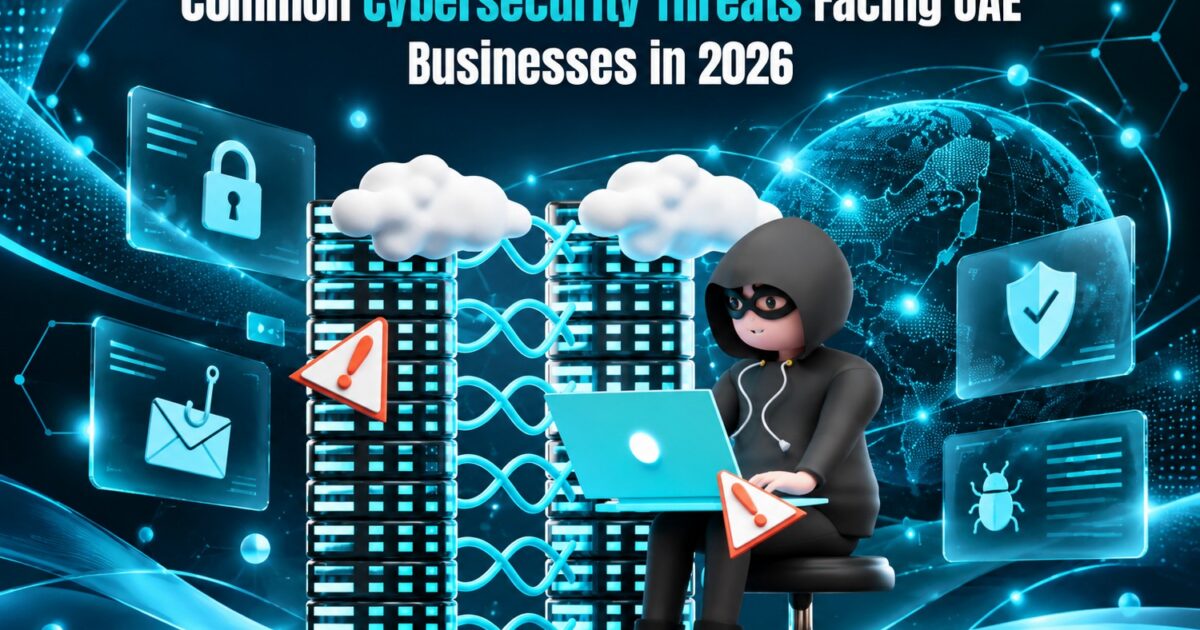
The UAE has achieved the status of one of the most digitally integrated regions globally. The exceptional growth of various sectors, including e-commerce, government services, and start-ups, has caught the attention of many criminals, especially cybercriminals. If you are a business owner in this region, it is useful to understand the challenges ahead.
Phishing is still regarded as the greatest concern. An employee receives an email, SMS, or WhatsApp message coming across as a communication from a bank, a delivery service or even his/her boss. Usually a single careless click on a link or a single wrong password entered into a fake web page is all it takes for a cybercriminal to succeed.
The next major concern is ransomware. This malware encrypts your data and demands payment in exchange for recovery. Even a short period of ransomware can halt the sales, delay orders, and keep customers waiting, and the impact on your reputation may be even longer than the downtime.
The fraudsters are also improving the way they operate. They may now use the power of artificial intelligence to generate messages that are perfect in every way and even to imitate voices. For instance, a phone call could be made pretending to be from your manager, asking you to transfer money; meanwhile, that could be an impostor. Something similar is happening with the compromise of the business email, where fraudsters take over the attack of the email account and send fake invoices or bank details. A number of companies lost huge amounts of money because no one verified the messages.
There are risks from within a system as well. Weak or reused passwords make it easy for a hacker to gain access, and an employee can leak data simply by sending a file to the wrong person or misplacing a laptop. Using a vendor that is not secure compounds the risk. If your vendor has poor security, your data may be exposed even if your own security is strong.
Fortunately, practically all of these attacks can be prevented with simple habits. Make sure your team understands the importance of taking a pause before clicking on links. All online accounts should be password protected with robust, unique passwords and two-factor authentication (2FA) enabled. Always keep your software updated and back up your data on a regular basis; always keep one of the copies in offline storage. Whenever you receive a payment request, confirm this by reaching out to the person over the phone, and comply with all relevant laws of the UAE.
How to Protect Your Business
- Always train your employees on the importance of stopping for a few seconds before they click on anything.
- Always use passwords that are unique and strong, and include two-factor authentication.
- Always keep software updated and back up the data with at least one backup being kept offline.
- Ensure files are restricted and former employees’ access is removed.
- Always verify each payment request over the phone.
- Always ensure compliance with UAE regulations regarding data protection and report any severe incident.
- Always plan for a simple response beforehand.
- Always perform security assessments and data backup tests every few months.
Also, consider cyber insurance for yourself.
Always foster an environment where employees report their mistakes without fear of blame. You don’t need a big budget to be secure. A few good habits, applied consistently, can protect your business from costly surprises.